Series: The King in Yellow and True Detective · Part 2 of 4
The turn
In Section 1 I laid out the framework. Rust on the threshold. Carcosa as somewhere you don’t travel to but realize you’ve always been in. The mask on the world, not on the King. Institutions built to keep the thing under the ceiling unseen. And the closing line — that what survives contact with truth isn’t the systems, it’s two people who won’t let go of each other.
I could keep writing analysis. There’s plenty left in Chambers, plenty left in the show. But if I’m being honest, the reason that season lodged in me the way it did — the reason I’ve watched it more than most people watch anything, the reason certain lines from a hundred-and-thirty-year-old book will not leave me alone — is not that it’s good television. It is. But so are other things.
The reason is that I have the eye too.
Not Rust’s case. Not his body count. Not his bottle. But the thing under Rust — the faculty that puts him under the spiral in the first place, the seeing that everyone else’s institutions exist to not do — I know that one from the inside. I’ve known it since I was a kid. I didn’t have language for it until Chambers gave me some, and Herbert gave me more, and Pizzolatto put it on screen so I could point at it and say there, that’s what it feels like from in here.
So this section and the next two are the turn. Same framework. Different subject. Me.
I want to say up front: I am not writing this because I’ve figured anything out. I’m writing it because I haven’t, and because if you’re the kind of person who reads a piece about Rust Cohle and feels something ring, you probably haven’t either. The thing I hated most in the church I grew up around — the thing I still hate — is people performing a resolution they don’t actually have. I won’t do that to you. What follows is field notes from a war I’m still fighting.
The house of webs
Here’s how my mind actually works. It’s the ground everything else stands on.
I’m dyslexic. Most people hear that and think trouble reading. And sure, that’s there — I can’t move my eyes down a page the way other people do, which is its own story. But the deeper thing dyslexia did to me is the thing nobody warned me about. It made me see in webs.
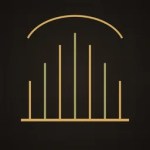
Here’s the image I keep coming back to. Imagine a spider’s web — not a tangle, a real one, the engineered kind, every strand placed, the whole structure holding tension across itself so that a touch anywhere is felt everywhere. That’s how an idea looks to me. I don’t arrive at it step by step, premise to conclusion, A then B then C. I see the whole web at once. Center, anchor points, how the strands pull against each other, and it’s beautiful, and it makes complete sense, and I can move from any point to any other because I can see how they connect.
And it’s not one web. It’s a house full of them. The web of a thing I’m studying. The web of a project I’m building. The web of my work. The web of whatever’s running in my head that day. I can stand in front of any single web and trace it, or I can step back and see where the webs connect to each other. That connective sight is the best thing about me. It’s the engine under everything I’ve ever done that mattered.
There’s a price, and you can probably feel it coming. The web is not a line. And other people live in lines.
When I try to explain one of these webs to someone, I have to take it apart and feed it out one strand at a time — because a sentence is a line, a paragraph is a line, human speech is a line. It goes one word after another, in order, and there is no other way to hand it over. So I start somewhere, because you have to start somewhere, and the person gets excited and then stops me: wait, what about B? You forgot B. And I didn’t forget B. B is right there. I can see B. I just haven’t reached it yet, because I’m laying the web out in a line and the line hasn’t gotten there. But by the time I say that, they think I’m not listening, or I missed it, or I’m dodging. The thing that has cost me socially my whole life is that I look like I’m not taking people seriously, when in fact I’ve already seen the entire shape of what they’re saying and I’m just stuck in the slow work of turning sight into sequence.
I answer fast for the same reason. People tell me to think about it, sleep on it, get back to them in a week. The week never changes anything. It can’t. The seeing already happened, instantly, the moment I had the pieces. What a week would buy me isn’t a better answer — it’s more time to serialize the one I already have. I know that sounds like arrogance. My first read is correct, I don’t need to think about it — who talks like that? But it isn’t a claim about being right. It’s a claim about when the knowing arrives, which for me is all at once and up front, and where the real labor lives, which is in the translation. The web is fast. The line is slow. That gap is most of my life.
It’s why I work the way I work. The vault full of notes. The voice-to-text. Talking a thing through out loud instead of writing it cold. Prosthetics for the linear-output problem — tools I use to catch thoughts as fast as I produce them and lay them in order. None of those are crutches for the thinking. The thinking is the strong part. They’re crutches for the serialization. They’re the ramp, not the legs. (One of those prosthetics is going to need its own piece, because for a certain kind of Christian reader it’s going to be the loudest thing in the room. I’ll get to it. Not yet.)
Hold onto the web, because now I have to show you the thing that hunts it.
The line
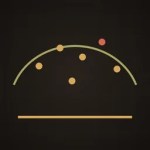
There is one thing in my head that is not a web. It’s a straight line, and it has one word at the end of it. The word is trash.
It works like this. Some piece of my house of webs takes a hit. It doesn’t have to be a big hit. One wrong word from the wrong person at the wrong moment. My wife says, not unkindly, I don’t understand it. A small thing. And the line fires: this is trash. And then — this is the part that took me decades to see clearly — the line uses my own gift against me. I really can see how all the webs connect. That connective sight is real. So the line doesn’t torch each web one at a time. It torches one strand and rides my own connections down every other strand in the house, and within a minute the verdict isn’t this one thing is trash. It’s the whole house is trash. All of it. Everything I’ve made. Everything I am.
I have done this since I was a kid. I used to draw. People said the drawings were good, and for a while I believed them, and I took pride in it. Then something hit me wrong — I genuinely can’t remember what, the trigger never matters, the trigger is never the real cause — and I burned them. All of them. Because they were trash. The drawings hadn’t changed. The seeing changed. It flipped, all at once, the way my seeing always works, except this time it flipped to the dark side and rendered the whole thing worthless in an instant.
The grown-up version is the same move. I’ll pour weeks, months, a year into something, fully convinced it matters, and then one minute — one comment, or one click in my own head — and I’m at two in the morning ready to throw the whole year away. Crying. I’m worthless. I’m not good enough. It’s not worth it. I’m not worth it.
Something I only figured out recently changed how I understand the whole pattern.
It’s not because I’m tired. I used to think it was — late, exhausted, defenses down. But that’s not it. It comes at two AM because that’s when my mind finally stops. All day I run three, four threads at once. I’m studying one thing and building another and publishing a third and doing my actual job underneath all of it, and I move between them constantly, and people who watch me do it think it’s a focus problem or nervous energy. It isn’t. It’s suppression fire. As long as the whole house of webs is lit and I’m moving through it, the line can’t get a clean shot — there’s no straight line available when the house is alive and multidimensional and humming. The instant I stop, the instant the house goes quiet, the dimensions collapse on their own, and into that flat silence the line slides in and hands me the verdict.
So I keep moving. I keep the webs lit. It works — it’s worked for decades — but it’s an exhausting way to be a person, because you cannot move forever, and a man who has to keep every web in his head lit twenty-four hours a day just to stay ahead of a single sentence is paying a tax he can’t afford.
Which brings me back to Rust, standing in Carcosa, talking without stopping, working the case without stopping, drinking without stopping. I used to think that was addiction and obsession. Now I think it’s the same thing I do. Rust never stops because the moment he stops, Carcosa comes back. The case is his suppression fire. The stillness is his threshold. He doesn’t fade into the dark when he’s tired. He fades in when he stops.
The only thing that ever reliably stopped the line for me, for years, walked on four legs beside me. I had a dog — rescued, the sweetest thing — and the way I kept the house lit on my worst stretches was to put a pack on and walk her. She never complained. Bad hips and she’d still go. And it was on one of those walks, at the bottom of one of the worst stretches I’d been through, that I cried out loud to God to fix my brain because I could not carry it anymore. I’m not going to dress that up. A man at the end of himself, walking a dog, saying the realest prayer he’d ever said. She’s gone now, and so are the others, and I can’t write more than that sentence about them without the line getting its clean shot. The brevity is the weight, not the absence of it.
The war
Before I go further I have to say the truest thing I know about all of this, because if I don’t, the rest of it will read like a man who solved something, and that would be a lie. It would be the exact lie I can’t stand when I hear it in church.
There is a war going on in my head. Not a battle — a war. The difference matters. A battle has an end. Somebody wins it and it’s over. A war is the whole long thing the battles happen inside of, and it does not end, and I do not expect it to end. Some of the battles I win. A lot of them I still lose. I lost one not long ago and I’ll lose another before this is published. Naming the enemy did not make the enemy go away. Understanding the mechanism did not disarm it. I want to be completely clear about that, because everything I’m about to tell you — the tactics, the tells, what I’ve learned about how the line works — none of it is a cure. I have not beaten this. I have just learned what it is.
But that turns out to matter more than I expected, and here I have to be honest about where the thought comes from, because I won’t claim it as mine. People throw around the line from Sun Tzu — if you know the enemy and know yourself, you need not fear the result of a hundred battles — usually as if it promises victory. It doesn’t. Read it again. He didn’t say you won’t lose. He said you need not fear. There will still be casualties. There will still be battles that go badly. What knowing the enemy buys you is not victory. It’s the removal of the fear you’d otherwise carry into the fight. And that’s the whole thing, because fear is what loses the battles you’d otherwise have won. Go in afraid and you second-guess, you freeze, you can’t see what’s swinging at you, and you lose to an enemy you might have beaten if you’d been able to keep your eyes open.
Frank Herbert said it better than anyone, in a passage from Dune that has been rattling in my head since I was young — the Bene Gesserit Litany Against Fear:
I must not fear. Fear is the mind-killer. Fear is the little-death that brings total obliteration. I will face my fear. I will permit it to pass over me and through me. And when it has gone past I will turn the inner eye to see its path. Where the fear has gone there will be nothing. Only I will remain.
— Frank Herbert, Dune
Everybody quotes the first line. Almost nobody quotes the rest, and the rest is the part that’s actually about the war I’m describing. Fear is the mind-killer — that’s the mechanism. Fear kills the mind, and the mind, the seeing, the web, the eye, is the only weapon I have against the line. But look at what comes after. I will permit it to pass over me and through me — not flee it, not deny it, let it move through and out. I will turn the inner eye to see its path — that’s the watchman exactly. That’s studying the enemy’s tactics after it strikes so you know it next time. And the ending: where the fear has gone there will be nothing. Only I will remain. That last line is the whole thing. When the fear burns off, what’s left isn’t the superhero voice or the fraud voice. It’s the I. The one who was watching both of them. Only I will remain.
So this is what I’ve actually got, and it’s all I’ve got. I know my enemy now. I know its tactics. I know it comes when I stop moving. I know it wears the costume of clarity. I know it collapses the house into a line so it can fit one word at the end. Knowing that doesn’t win the war. It swings the battles. It means I walk in without the fear that used to lose them before they started, and I win more of them than I used to — not all, more — and what I’m actually hoping for, the only victory I think is on offer in this life, is that one day the battles I lose are outnumbered, tremendously, by the ones I win.
That’s not “I figured it out.” That’s a man who learned the shape of the thing he’s fighting and is still fighting it. If you’re reading this and you fight the same war, I need you to hear that part especially, because the worst thing I could do is make you feel like I’m standing on the far side of it waving. I’m not on the far side. There is no far side. None of us has this figured out — we just pretend we do, and the pretending is its own kind of cruelty, because it makes the person still in the trench feel like they’re the only one who didn’t get out. You’re not the only one. You’re not worthless because you’re still losing battles. I’m still losing them too. We’re in the same war, and the not-having-it-figured-out is the normal condition, not the failure.
Now I can tell you what I’ve learned about the enemy.
What the line is pretending to be
The first thing I learned is that the line pretends to be the truth.
That’s what makes it so dangerous at two in the morning. It doesn’t feel like a lie. It doesn’t feel like the depression talking. It feels like finally seeing clearly — like all day I’ve been distracting myself with busywork and elaborate webs, and now, in the quiet, I’m finally being honest with myself. It feels like clarity. It feels like the one true thread running under all the noise. It feels, in other words, exactly like the thing it’s counterfeiting.
As I’m sure you can tell by now, I’m a Dune man — and the reason it grips me, past the worldbuilding, past everything, is Paul, and the golden path. Paul’s curse in those books is not that he can’t see the future. It’s that he can. He sees all of it at once — every branch, every path, the whole web of possible futures — and it nearly destroys him, because seeing every path means seeing every horror on every path, and no human frame is built to hold that much at once. The golden path is the single thread through the web that leads to survival. But to walk it, Paul has to give up the one comfort he wants most: the comfort of not seeing. He can have the vision or he can have peace. Never both. Same eye. Same cost.
I see myself in that, obviously. But here’s the move that actually helped: I realized I’d been confusing two things that look identical and are opposite.
The web — the seeing of all the paths, terrible but true — is prescience. That’s the gift. And the line — everything is trash — pretends to be prescience. It pretends to be the clarifying thread, the golden path, the truth under the noise. But it’s the opposite of prescience. It’s a collapse. It takes the whole multidimensional house and flattens it to one line because trash is the only verdict that fits at the end of a straight line. A web can’t be trash. A web is too alive, too connected, too obviously made of real strands. So the line has to destroy the dimensions first. It has to make the house flat before it can call the house worthless. Its entire method is reduction. Kill the web, then judge the corpse.
And there’s a tell. The true golden path costs you the comfort of not-seeing. Leto II walked it for three thousand years and never once got the relief of it’s all garbage, I can put it down now. The real thing is harder. It branches. It has no single sentence at the end of it. But the line offers relief. It says: stop holding all those webs, you don’t have to carry them, just accept that it’s all trash and you can rest. That’s how I know it’s a counterfeit. If the clarity comes with permission to stop — to torch it, to put it all down — it isn’t prescience. It’s the worm offering me an exit.
So the move, when the line fires, is not to argue with it. You can’t argue a straight line; it has no handholds, no branches to grab. The move — when I can manage it, which is not every time, because at two in the morning the line still feels exactly like clarity and some nights I lose to it before I remember it’s a counterfeit — is to refuse the collapse. Put the thing back on the board. Make it a web again. The line can only survive in one dimension. When I can get the house re-inflated, the verdict can’t hold, because the whole house is trash is a sentence that only makes sense about a line, never about a living web. That’s the tactic. It doesn’t always work. But it’s won me battles I used to lose automatically, and that’s the only kind of progress this war offers.
I’d been doing a version of this for years without knowing what it was. It’s what the journaling is. It’s what the talking-it-through is. Every time I take the flattened thing and lay it back out into all its connected strands, I’m reversing the collapse. I used to call it “wasting time” and “spending too much money talking to a machine.” Turns out it’s one of the few things that reliably un-flattens the house — not always, not on the worst nights, but often enough to swing the ratio.
Continues from Part 1: The King in Yellow · Continues in Part 3: The King in Yellow — The Borrowed Ruler
All 4 parts in this series
- Part 1The King in Yellow
- Part 2The King in Yellow — The Eye and the LineYou are here
- Part 3The King in Yellow — The Borrowed Ruler
- Part 4The King in Yellow — The Wall and the Fork
New field notes when they are ready, along with the research underneath them. No drip sequence, no course, nothing to buy.