Tool Beta
The Ancient World Behind the Text: Ideas
The customs, offices and ideas a first reader knew without being told, what each meant then, and the nearest thing you already know.
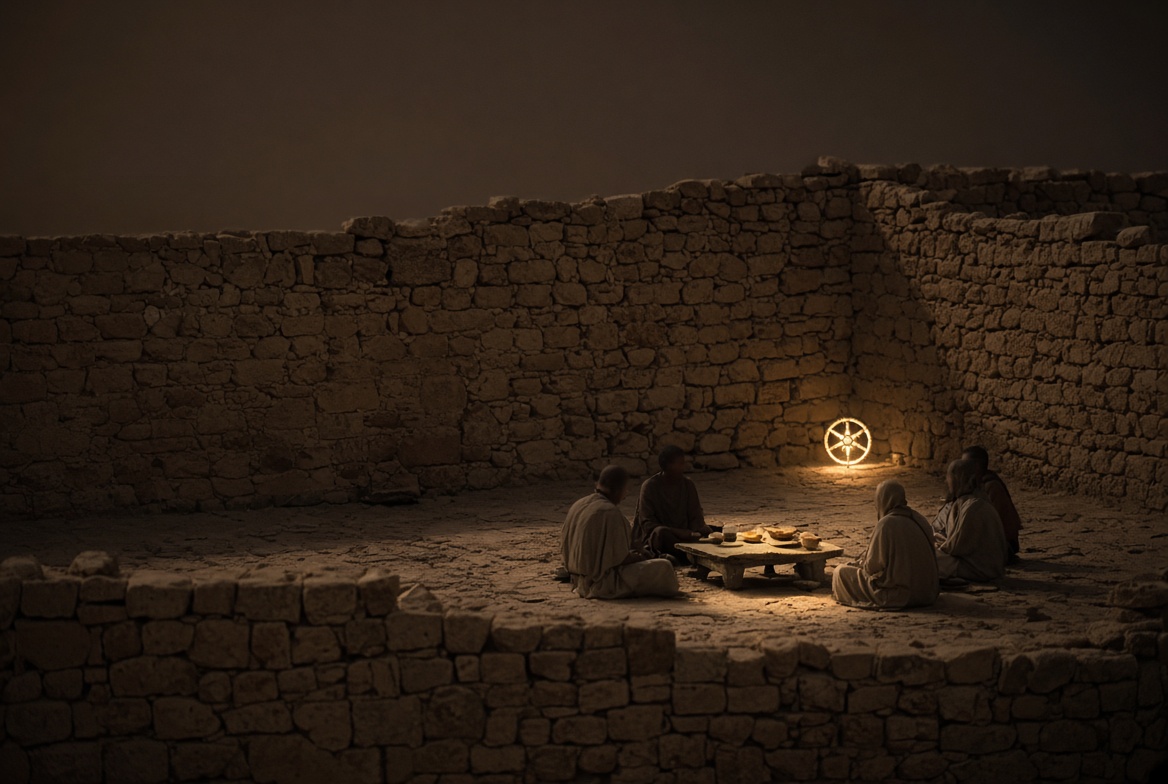
Magi and the star
Eastern astrologers and dream readers, respected across the empire for reading the sky. A star that meant a new king meant danger for the old one.
The visitors from the east said the sky had announced a new king, and the old king did not sleep that night. Magi were a priestly class from the east who read the stars and interpreted dreams. People across the Roman world took astrology seriously and believed the heavens could announce the birth or death of rulers. Israel's Scriptures forbade it.
The Greek Old Testament uses the word magi only in Daniel, for the king's experts. By this period the term covered astrology, dream interpretation, the study of sacred writings and magic. Keener calls the magi pagan astrologers whose skills were widely respected, since everyone agreed the East produced the finest astrologers. The Old Testament forbade such prediction from signs (Deuteronomy 18). The ancients thought comets and falling stars foretold the fall of rulers. Nero reportedly killed nobles so that a comet's omen would fall on them and not on him. Greeks thought magi especially skilled at reading dreams. Astronomers and astrologers were then the same people, who expected events in the sky to mirror events on earth. Heiser points out that in 1 Enoch the Watchers taught the signs of the stars, and reads the magi as practitioners of those arts who now come to worship.
An analogy: foreign intelligence analysts arriving at a palace to ask where the new heir has been born. They mean no harm, but the question itself is treason in that room.
Because rulers feared astrological signs of their end, the question of the magi in Matthew 2:2 alarms Herod and all Jerusalem with him. Gentiles skilled in forbidden arts come to honor Israel's king, while Herod's scholars know the text and stay home. The same word names the sorcerer Bar-Jesus in Acts 13:6, which shows how the word could also be heard.
Not analysts working from reports. The magi read the sky, and nearly everyone then believed the stars could announce the rise or fall of a ruler, which is why their question frightened a king. Their arts were ones Israel's Scriptures forbade. Matthew gives them no number and no crowns.
Two questions. First, where they came from. Keener's notes, the CSB Study Bible and the ESV Study Bible say Persia or Babylon. Bailey says Arabia, on the evidence of the gifts and early Christian writers. Second, what the star was. Wright mentions the conjunction of Jupiter and Saturn three times in 7 BC. Heiser, following others, argues for signs involving Jupiter and Regulus with a birth on 11 September 3 BC. Keener and the study Bibles leave it open among a comet, a nova and other suggestions. Wilkins sets out a conjunction of 7 BC, a nova of 5 BC, a supernatural light and an angel. Carson, Moo and Morris think no identification certain, and doubt that a star which went ahead and stopped was a natural phenomenon.
- {"u":"https:\/\/jayms.com\/bible-study-tools-2\/ancient-world-passages\/matthew-2-1-12\/","n":"Matthew 2:1-12, Magi at Herod's court","s":"Magi from the east arrive in Jerusalem asking for the newborn king of the Jews. Herod consults his scholars, sends the visitors to Bethlehem, and they go home another way.","r":"Matthew 2:1-12"}
- {"u":"https:\/\/jayms.com\/bible-study-tools-2\/gods-of-the-bible\/the-host-of-heaven\/","n":"The host of heaven","s":"Two things at once: God's heavenly army, and the sun, moon and stars Israel was told not to worship.","r":"1 Kings 22:19"}
- NIV Cultural Backgrounds Study Bible, notes on Matthew 2:1-2, 2:2, 2:3 and 2:12
- CSB Study Bible, note on Matthew 2:1, and word study magos
- ESV Study Bible, study note on Matthew 2:1
- Craig S. Keener, The IVP Bible Background Commentary: New Testament, on Matthew 2:1, 2:2, 2:3 and 2:12
- N. T. Wright, Matthew for Everyone, Part One, comment on Matthew 2:1-12
- Kenneth E. Bailey, Jesus Through Middle Eastern Eyes, ch. 3, The Savior, the Wise Men and the Vision of Isaiah
- Michael S. Heiser, Reversing Hermon, ch. 4, The Sin of the Watchers and the Birth of Jesus, and ch. 5, The Sin of the Watchers and the Genealogy of Jesus
- Michael J. Wilkins, Matthew, in Zondervan Illustrated Bible Backgrounds Commentary, ed. Clinton E. Arnold, sidebar The Christmas Star
- D. A. Carson, Douglas J. Moo and Leon Morris, An Introduction to the New Testament, ch. 1, The Synoptic Gospels, section Gospel Chronology, Jesus' Birth









