Tool Beta
The Ancient World Behind the Text: Ideas
The customs, offices and ideas a first reader knew without being told, what each meant then, and the nearest thing you already know.
The mystery cults
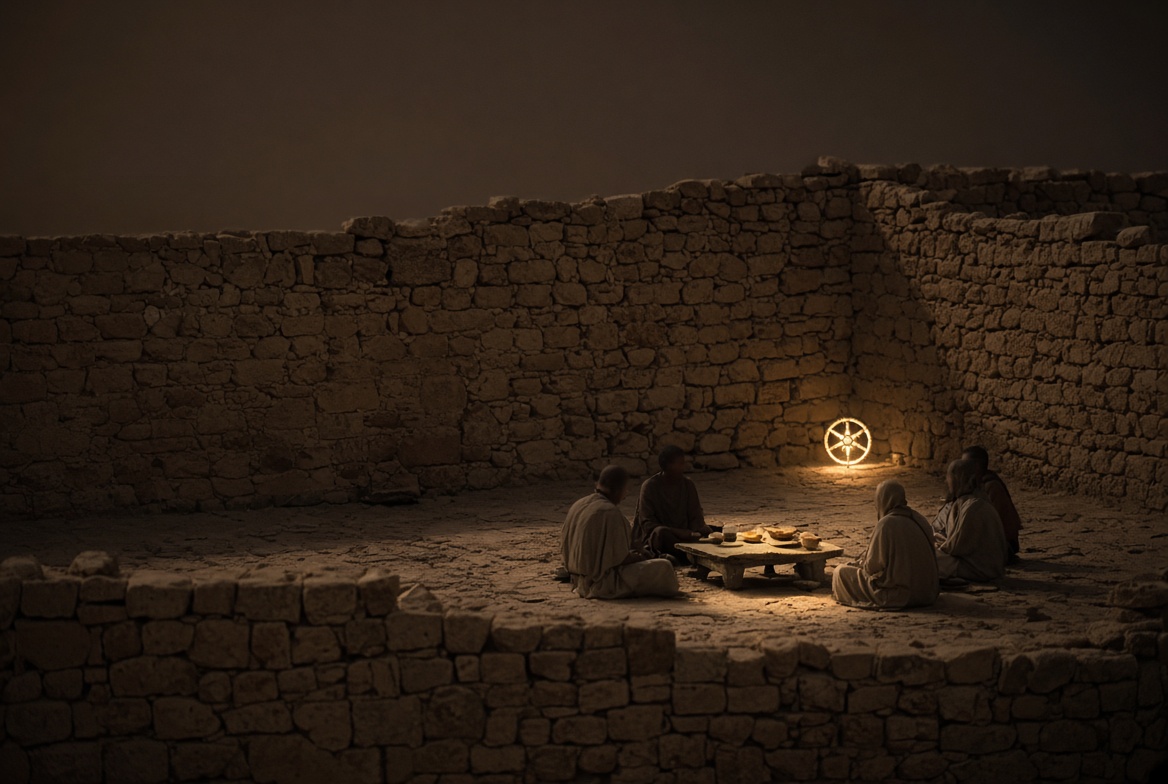
Cults that a person entered by a secret initiation, often held at night. Some promised freedom from Fate, some had a name for drunken or immoral rites, and Rome distrusted them as foreign.
Some clubs still swear new members to secrecy and hold the ceremony late at night. In the Greek and Roman world many people joined a cult through a private initiation whose details they swore never to tell. The cults differed widely, and because they kept their secrets, little is known about them for certain. Some promised to free their members from Fate. Some held their rites at night, and a few had a reputation for drink and sex. When Paul speaks of a mystery, he uses a word these cults also used.
The mystery cults were various Greek cults entered by initiation, whose details members had to keep secret. They differed widely, so what is known of them is limited. Some, such as Mithraism, spread in the Roman world only after Christianity had, and borrowed Christian features in later centuries. Some, Isis's cult among them, drew followers by promising to release initiates from Fate. Initiations normally took place at night, some cults had immoral reputations, and Roman critics lumped Christians in with them. Romans suspected eastern cults of undermining family values. Rome banned the rites of Bacchus, or Dionysus, for a time, as much for their novelty as for their alleged immorality. The word mystery was used in the cults, but Keener finds the main background for Paul's use in Daniel 2 and the Dead Sea Scrolls. There it means God's plan for history, once hidden and now revealed, and the cultural backgrounds notes agree. Their article on the cults describes initiation as a ritual death and rebirth, one Mithraic initiate being "piously reborn". It ties a god's return from death to the yearly return of spring, unlike the Jewish and Christian hope of one bodily resurrection. It adds that converts to Christianity were never sworn to secrecy. Arnold, following Ramsay, reads Colossians 2:18 as a teacher boasting of what he saw at the climax of initiation, using a word found in inscriptions from Apollo's oracle at Claros. The CSB Study Bible draws the contrast sharply. The mystery religions held that the divine will was hidden from all but an enlightened few, while for Paul a mystery is revealed so that all can understand it.
An analogy: a secret society with passwords, robes and a ceremony after dark, which outsiders suspect of the worst because they can never see inside. Members feel chosen, and the neighbors feel uneasy.
Because initiation into the cults was secret and often at night, the call in Ephesians 5:11-12 to expose what is done in darkness sets the church apart from the reputation such cults had. Paul's mystery in Romans 16:25-26 is a plan kept secret for long ages and now made known to the nations, the opposite of a secret kept for initiates.
Not a social club with rituals. A secret society's ceremony binds members to one another. A mystery initiation was religious, pictured as a death and rebirth, and some cults promised freedom from Fate. The cults also differed so widely that little holds for all of them.
How far Paul's language answers the cults. The CSB Study Bible says Paul implicitly addressed matters raised by the mystery religions of the region and sets his mystery against theirs. The Zondervan dictionary goes further, calling Paul's use of mystery "a clear allusion" to the cults. Keener grants that the cults used the word but places Paul's background in Daniel and the Dead Sea Scrolls, and the cultural backgrounds notes and their article do the same.
- {"u":"https:\/\/jayms.com\/bible-study-tools-2\/ancient-world-passages\/ephesians-5-1-20\/","n":"Ephesians 5:1-20, Children of light, and wine or the Spirit","s":"Paul calls believers to imitate God, to have nothing to do with sexual immorality, coarse joking or deeds done in the dark, and, instead of getting drunk on wine, to be filled with the Spirit, singing and giving thanks for everything.","r":"Ephesians 5:1-20"}
- {"u":"https:\/\/jayms.com\/bible-study-tools-2\/ancient-world-passages\/colossians-1-24-2-5\/","n":"Colossians 1:24-2:5, Sufferings for the body, and a steward of the mystery","s":"Paul rejoices to suffer for the church, fills up what is lacking in Christ's afflictions, calls himself the servant entrusted with God's long hidden mystery, and tells churches he has never met how hard he struggles for them.","r":"Colossians 1:24-2:5"}
- NIV Cultural Backgrounds Study Bible, NT Glossary, entry Mystery cults, and notes on Ephesians 1:9, 3:3, 5:11 and 5:21-6:9
- Craig S. Keener, The IVP Bible Background Commentary: New Testament, on Ephesians 1:21-23, 3:3-5 and 5:8-13
- CSB Study Bible, Introduction to Ephesians, Message and Purpose, and notes on Ephesians 1:9 and 3:3
- N. T. Wright and Michael F. Bird, The New Testament in Its World, ch. 7, The Greco-Roman Context of the Early Church, Religion, Philosophy, and Culture
- NIV Cultural Backgrounds Study Bible, article Mystery Cults (Colossians 3)
- Clinton E. Arnold, Powers of Darkness, ch. 10, The Problem at Colossae
- J. D. Douglas and Merrill C. Tenney, Zondervan Illustrated Bible Dictionary, entry mystery religions









