Tool Beta
The Ancient World Behind the Text
Pick a passage anywhere in the New Testament. See the customs and ideas a first reader knew without being told.
Mark 14:12-31, The Passover meal
Jesus eats the Passover with the Twelve, names a betrayer at the table, gives the bread and the cup new meaning, and warns that all will scatter.
Mark 14:12-31, in every translation this tool compares.
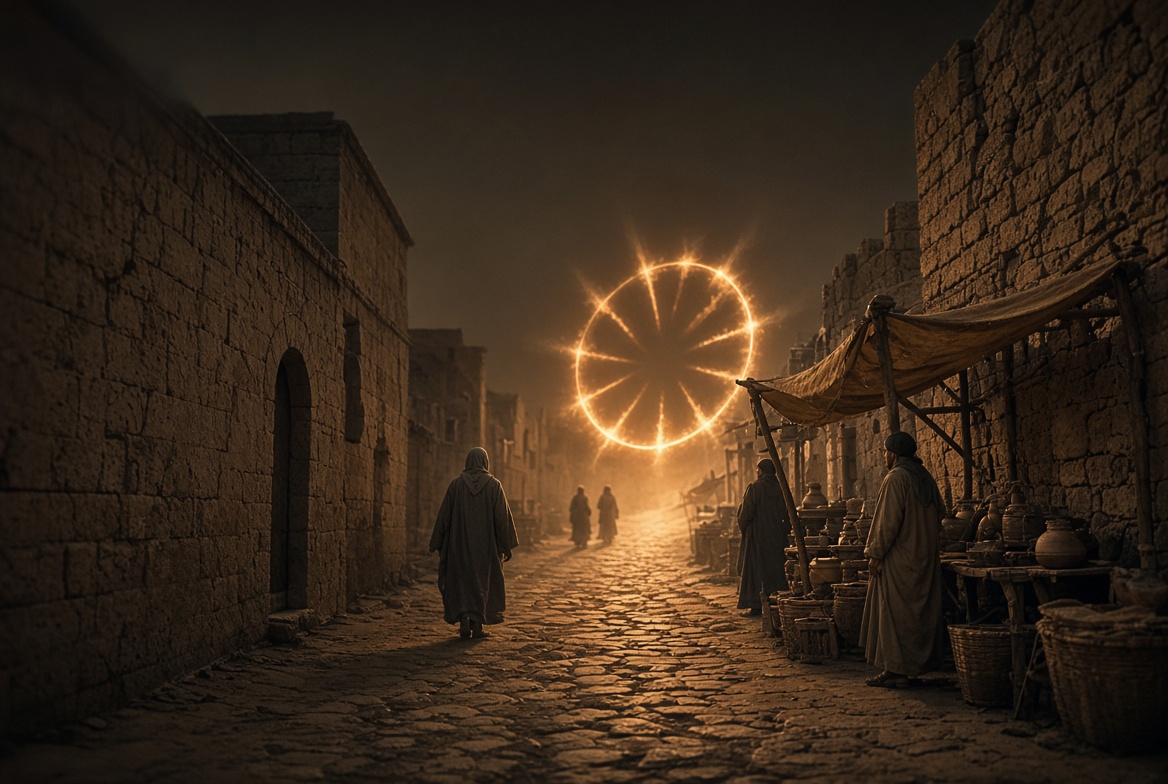
Two disciples follow a man carrying a water jar to a large upstairs room. At the meal Jesus says one who eats with him will betray him. He takes bread and a cup and speaks of his body and of his blood of the covenant. On the way to the Mount of Olives he quotes Zechariah, the shepherd struck and the sheep scattered, and tells Peter he will deny him three times.
- {"u":"https:\/\/jayms.com\/bible-study-tools-2\/ancient-world-ideas\/passover-pilgrims\/","n":"Passover and the pilgrim crowds","s":"The spring festival that retold God's rescue of Israel from Egypt. Jerusalem filled with pilgrims, and hopes of freedom ran high.","r":""}
- {"u":"https:\/\/jayms.com\/bible-study-tools-2\/ancient-world-ideas\/reclining-at-table\/","n":"Reclining at table","s":"At banquets men lay on couches, propped on the left elbow, and where you lay showed your rank.","r":""}
- {"u":"https:\/\/jayms.com\/bible-study-tools-2\/ancient-world-ideas\/eating-together\/","n":"Eating together","s":"Sharing a table made a bond of friendship, so who you ate with told everyone whose side you were on.","r":""}
- {"u":"https:\/\/jayms.com\/bible-study-tools-2\/ancient-world-ideas\/the-twelve\/","n":"The Twelve","s":"Jesus chose twelve men to be with him and to be sent out. The number matched Israel's twelve tribes.","r":""}
- {"u":"https:\/\/jayms.com\/bible-study-tools-2\/ancient-world-ideas\/shepherd-and-sheep\/","n":"Shepherd and sheep","s":"Scripture pictured Israel without a leader as sheep without a shepherd, and promised that God himself would come to shepherd them.","r":""}
Keener notes that women usually carried water jars, which made the man easy to follow, and that a room big enough for all the disciples points to the wealthier upper city. On blood of the covenant he points to Exodus 24:8 and notes that the thought of drinking blood revolted Jewish people, so the words are not literal. Passover custom had people stay up late retelling God's acts of rescue, so when the disciples later fall asleep in Gethsemane (14:37-41), it is on the night they were meant to keep awake (Keener's notes). Garland cautions that the Passover rites known from the Mishnah developed after the temple fell and may not have been the custom in Jesus' day, so the hymn of 14:26 need not be the Hallel. The cockcrow may mean the Roman trumpet at the end of the third watch, though Garland prefers a real bird. The Synoptic Gospels make this a Passover meal on Nisan 15 while John 18:28 may put the death on Nisan 14; Carson, Moo and Morris name April 7, AD 30, and April 3, AD 33, as the likeliest dates.
- NIV Cultural Backgrounds Study Bible, notes on Mark 14:12, 14:13, 14:15, 14:18, 14:24, 14:30 and 14:41, and note on Matthew 26:28
- N. T. Wright, Mark for Everyone, comment on Mark 14:12-25
- ESV Study Bible, study notes on Mark 14:12 and 14:27-28
- David E. Garland, Mark, in Zondervan Illustrated Bible Backgrounds Commentary, ed. Clinton E. Arnold, on Mark 14:12, 14:15, 14:23, 14:26 and 14:30
- D. A. Carson, Douglas J. Moo and Leon Morris, An Introduction to the New Testament, ch. 1, The Synoptic Gospels, section Gospel Chronology, The Death of Jesus