Tool Alpha
The Visual Atlas
Places, art and manuscripts across time. First era: the apostolic and early church, from Pentecost to the early fourth century.
Ephesus
Paul taught here for two years and the city rioted for Artemis. The fathers put John here into Trajan's reign, and they disagree about which John lies in which tomb.
- 37.940164
- 27.342403
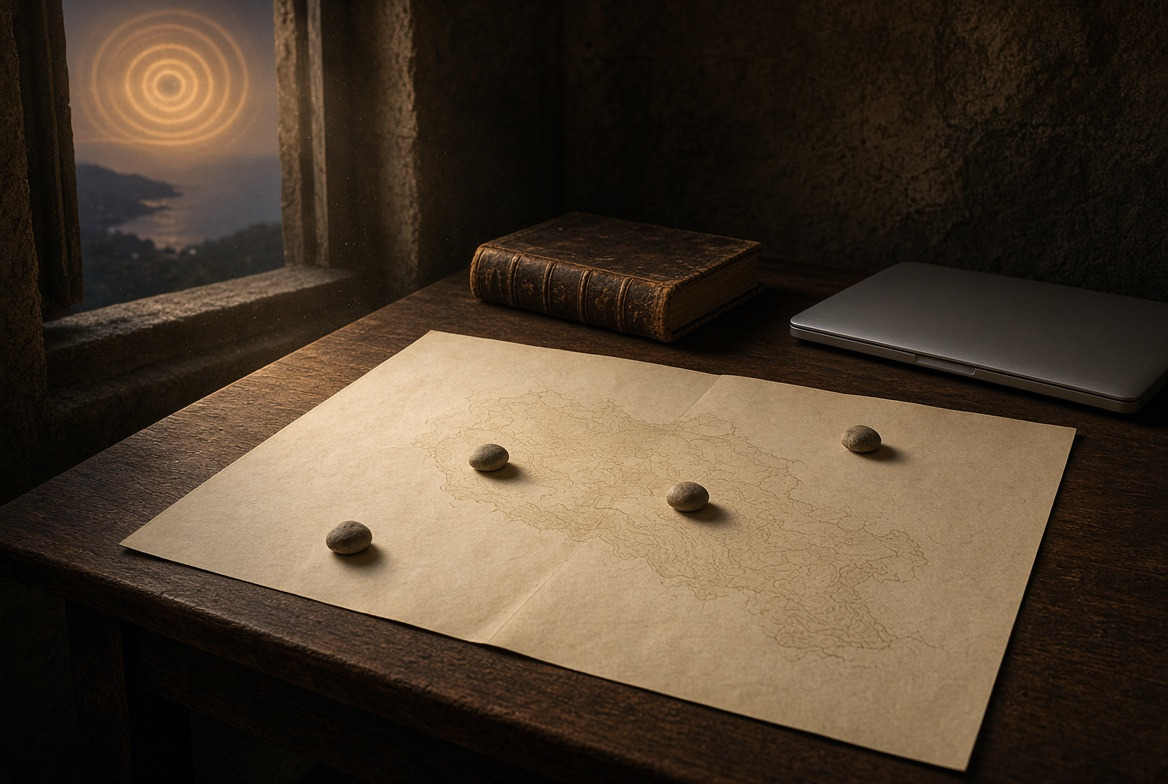
The real question: when later writers say John lived and died at Ephesus, how do we know which John they mean? Two men in town have the same name, and both have a plot in the cemetery. The stone says only the name. Which one is the famous one, and how would you tell?
Paul reasons in the synagogue at Ephesus and leaves Priscilla and Aquila there (Acts 18:19). Apollos, born at Alexandria, arrives (Acts 18:24). Paul stays two years teaching in the school of Tyrannus, so that all Asia hears (Acts 19:9-10), and the silversmiths' riot ends with the crowd shouting for Diana of the Ephesians for two hours (Acts 19:23-41). He later calls the Ephesian elders to Miletus (Acts 20:17-38). Irenaeus says the church at Ephesus was founded by Paul and that John remained there until Trajan's time (Against Heresies 3.3.4), and that John published his Gospel at Ephesus (3.1.1). Justin held his dialogue with Trypho in the city (Church History 4.18.6). Polycrates, bishop of Ephesus, writes to Victor of Rome that John sleeps at Ephesus (Church History 5.24.2-3).
Paul in the synagogue (Acts 18:19). Apollos from Alexandria (Acts 18:24). Disciples of John's baptism (Acts 19:1-7). The school of Tyrannus (Acts 19:9). Two years, until all Asia heard (Acts 19:10). Demetrius and the riot (Acts 19:24-41). The elders called to Miletus (Acts 20:17).
Eusebius says that by tradition Asia fell to John, who lived there and died at Ephesus (Church History 3.1.1), and that Timothy is recorded as first bishop of Ephesus (3.4.6). He quotes Irenaeus and Clement on John at Ephesus (3.23.4-6). Ignatius, at Smyrna, writes to the church of Ephesus and names its pastor Onesimus (3.36.5). Polycrates names Philip's daughter and John as buried at Ephesus (3.31.3; 5.24.2-3).
No manuscript in the sources read here is tied to Ephesus in this era.
Eusebius says, from Papias, that two tombs at Ephesus were each called John's, and that the second John, the presbyter, may be the one who saw the Revelation (Church History 3.39.6). Dionysius of Alexandria makes the same point about two monuments (7.25.16). John's return from Patmos to Ephesus is, in Eusebius's own words, an ancient Christian tradition (3.20.11). The list of the twelve among the dubious and spurious pieces attributed to Hippolytus says John's remains were sought at Ephesus and not found, and the list of the seventy makes Phygellus and Caius bishops of Ephesus. That is legend.
Not proof of who wrote the Gospel of John. The entry records what the fathers say about John at Ephesus. The authorship question needs its own treatment.
- Acts 18:19-28
- Acts 19:1-41
- Acts 20:17-38
- Revelation 2:1-7
- Acts, checked in the King James Version
- Irenaeus, Against Heresies, ANF vol. 1, 3.1.1 and 3.3.4
- Eusebius, Church History, trans. McGiffert, NPNF2 vol. 1 (1890), 3.1, 3.4, 3.20, 3.23, 3.31, 3.36, 3.39, 4.18, 5.24, 7.25
- Pseudo-Hippolytus, On the Twelve Apostles and On the Seventy Apostles, ANF vol. 5, Appendix of Dubious and Spurious Pieces
- Pleiades gazetteer, place 599612, Ephesus/Arsinoe(ia), places.csv